
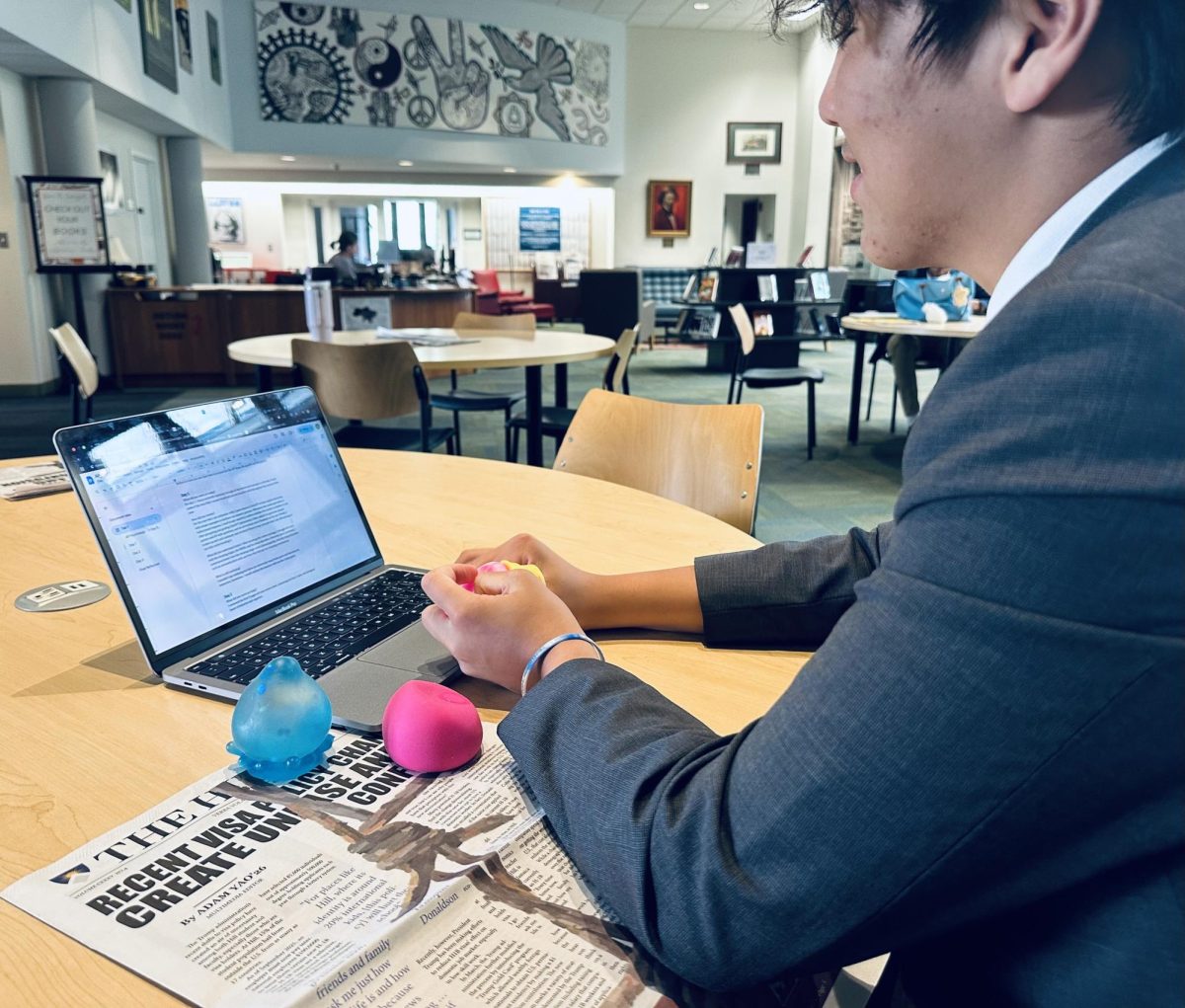























Recently, the colorful squishy toy known as NeeDoh has become the latest addition to the growing wave of fidget toy trends. Whether in classrooms, dorms, or other spaces across The Hill School campus, NeeDohs have quietly become a common sight, particularly among 3rd and 4th formers.
Student toy trends are by no means new at Hill. From Rubik’s Cubes and fidget spinners to Pop Its and Labubu collectibles, waves of trendy products have surfaced before gradually fading away. Originally designed to help children with sensory development, NeeDoh sets itself apart with its gratifyingly soft and stretchy texture that returns to its original shape after squeeze.
Now, the squishy toys can be seen everywhere on campus, extending far beyond the preschool classrooms and occupational therapist offices for which it was originally created. This new-found popularity was spurred by NeeDoh’s heavy prevalence on social media.
“I think it’s from TikTok and the internet, where people post videos like unboxing NeeDoh or going to stores to see if they can find one,” said Ray Chiang ’28, who has owned NeeDoh toys for around two years. According to Chiang, the NeeDoh trend escalated around December in the United States, when “parents were lining up at Target early in the morning, and people would rush in and fight over NeeDohs to the point where stores had to limit how many each person could buy,” Chiang said.
The phenomenon of crowd attention and conforming to trends is increasingly visible, Catherine Zhang ’28 observed. Repeatedly seeing the toy across social media feeds of “squishy-content” algorithm triggered her desire to purchase her first NeeDoh around spring break. While Zhang acknowledges that she is “influenced easily” by trends, she also believes the appeal of NeeDoh extends beyond virality because “they just look aesthetic and it helps me to deal with boredom.”
Chiang shares a similar perspective, noting that NeeDoh provides comfort during activities such as choir. “NeeDoh is something you can play with and have something to grip onto,” he says, explaining that it helps him stay focused and relaxed during singing.
The market appeal for products like NeeDoh, however, is not entirely accidental. According to economics instructor Michael Leasure, these trends are fundamentally driven by the law of supply and demand. “Firms can aggressively market products or intentionally limit supply to increase demand and consumer awareness,” Leasure said. By combining both strategies, firms can create shortages or scarcity around their products, while the product’s online presence triggers consumers’ urge to purchase.
Although the toy market is seemingly highly competitive, meaning that firms in the industry are generally price takers, companies can still differentiate their products through marketing and signaling trust with consumers. This allows them to gain short-run monopolistic market power and charge higher prices, creating a stronger sense of worth and attraction among consumers.
Leasure compares NeeDoh to past trends such as Supreme clothing, fidget spinners, and Labubu, arguing that these products “basically break the market for a few months” before eventually settling back into long-run competitive conditions.
The reason such trends persist lies in the relatively low cost of consumption for consumers. Because products like NeeDoh cost less than ten dollars, consumers are more willing to participate in hype-driven purchases. Guided by the FOMO effect, one person’s adoption of a trend often encourages another’s, creating a self-reinforcing cycle of social influence.
Nevertheless, trends driven by scarcity and hype occasionally extend beyond harmless toys. In more extreme cases, speculative consumer behavior can evolve into irrational decision-making and risky financial behavior. The boom and collapse of NFTs, or non-fungible tokens, in 2021–2022 is a classic example of excessive speculation, as Leisure points out. NFTs are digital assets, such as images or artworks, verified by an emerging technology called blockchain that creates an authentic digital ownership record through cryptocurrencies like Ethereum and Bitcoin. Rather than purchasing the actual utility of the artwork itself, many consumers were instead paying for exclusive digital ownership and status.
“People got stuck with hundreds of thousands of dollars of losses on NFTs because the market decided three months later that there was no value to them,” Leisure said. In fact, the total NFT market cap, which peaked over $17 billion in early 2022, plummeted by more than 90% later in the year.
While NeeDoh itself is another expression of a recurring trend cycles students have experienced many times before, its presence reflects a broader pattern of consumer psychology through modern society. Whether in toys, fashion, collectibles, or digital assets, perceived value is often determined by hype and scarcity, which makes up the market demand, rather than the practical utility of the product. At Hill, that value comes from the student’s demand for a temporary stress-relief toy.