

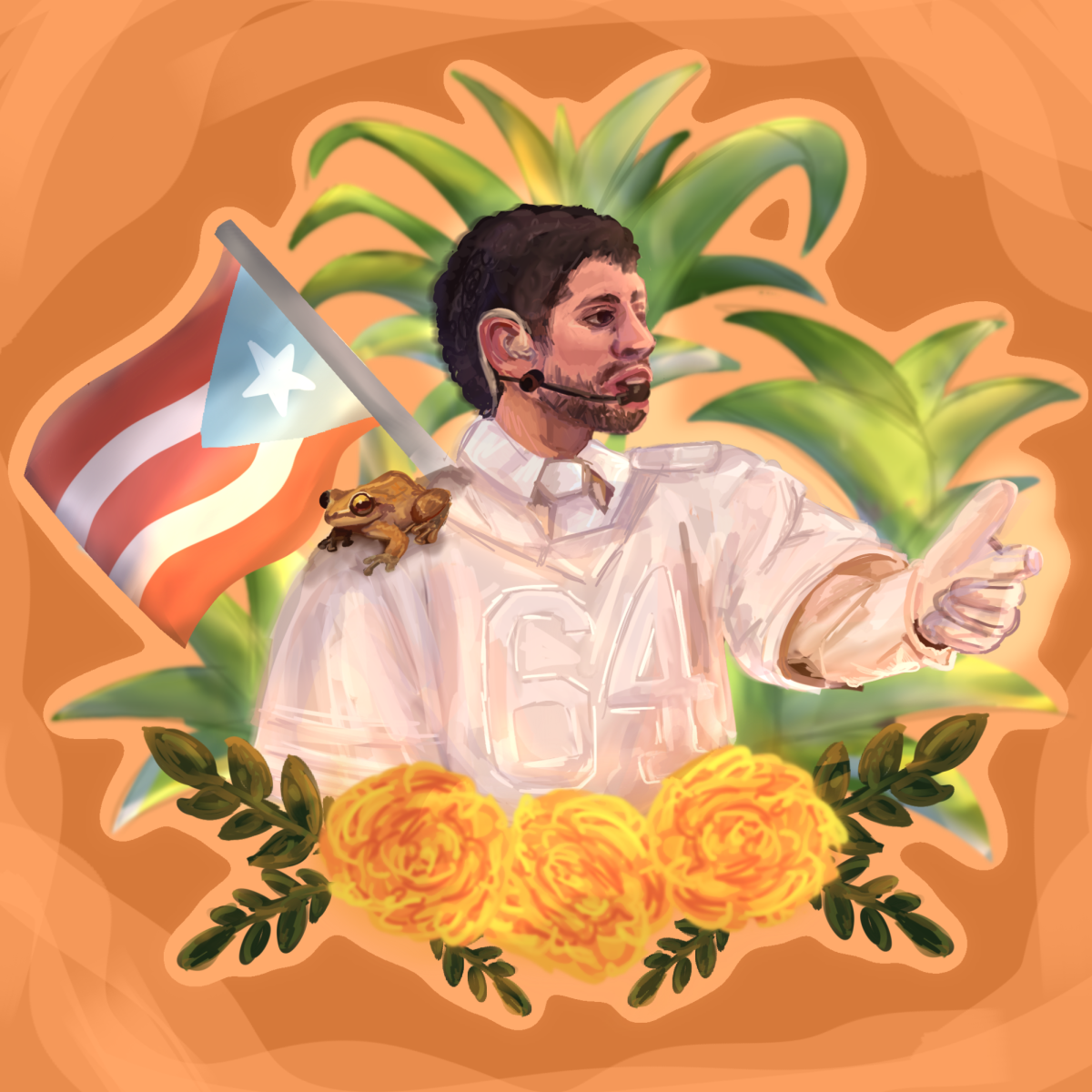















On February 8, 2026, the global spotlight shifted from the gridiron of Levi’s Stadium to a vibrant, technicolor “casita” in Santa Clara. Bad Bunny, the Puerto Rican superstar born Benito Antonio Martínez Ocasio, made history as the first solo Latin artist to headline the Super Bowl halftime show, performing almost entirely in Spanish. In a 13-minute spectacle that felt more like a street festival than a corporate broadcast, “Benito” brought the soul of Puerto Rico to 128 million viewers.
The performance was a dense tapestry of cultural symbolism. Opening with the chart-topping “Tití Me Preguntó,” the stage was transformed into a bustling neighborhood scene featuring “piragua” (shaved ice) carts, domino tables, and sugar cane fields. Student and fan MingMing Yang ’28 noted the impact of these specific details, stating, “Seeing the neighborhood and all those little details here and there that’s culturally related to his heritage, I was honestly just proud of him, and it really added to the immersive experience.” This is a nod to the island’s agricultural history.
Unlike previous shows that relied on high-tech futurism, Bad Bunny leaned into “Boricua” joy and community. One of the night’s most talked-about moments involved an actual wedding ceremony on stage, with the artist later signing the couple’s marriage certificate as a witness. This grounded, human approach was punctuated by a star-studded guest list: “Lady Gaga” joined for a salsa-infused rendition of “Die With a Smile,” and “Ricky Martin” electrified the crowd with “LO QUE LE PASÓ A HAWAii.” Yang observed how the performance seemed to grow in scale, saying, “He started small from like, Puerto Rico, and then like afterwards he expanded that to the whole of America and then finally he like spread his message towards the world.,” Luca Hoffman ’28 added. “It was just really fun watching the show. I felt like I’m in Puerto Rico. There was a big difference I saw with last year’s halftime show.”
The “Benito Bowl” set staggering records, generating over 4 billion social media views within 24 hours. For many, the show’s significance was its refusal to assimilate. By keeping the lyrics in Spanish and featuring dancers dressed as everyday Puerto Ricans rather than polished pop backups, Bad Bunny sent a message of visibility.
Kris Donaldson said, “You know, I always loved Spanish songs. The message was even better.”
The performance also highlighted the island’s struggles. During “El Apagón,” set pieces resembling electrical poles flickered and went dark, a poignant reference to the frequent power outages that have plagued Puerto Rico since Hurricane Maria.
“It’s actually one of the songs of the first album that I ever listened to,” Yang shared, explaining that the track raises awareness for natural disasters on the island. “I really loved it because in this whole song, it’s like about Puerto Rico and he’s like raising awareness for all those,” Brennan Klier ’28 added. “It’s great. I’ve been to Puerto Rico and it reminds me a lot of it there. It’s beautiful. ”
The artist ended the night by holding up a football emblazoned with the words: “Together We Are America,” while a massive message on the Jumbotron declared, “The only thing more powerful than hate is love.”
Donaldson added, “It was a great halftime show. Seeing all these, the final message, I love it.”
Despite the massive viewership and critical acclaim from stars like Pedro Pascal and Cardi B, the performance sat at the center of a brewing a so-called “culture war.”
Supporters praised the show as a landmark moment for the Latino community, arguing it redefined what “American” culture looks like in 2026. California Governor Gavin Newsom even declared it “Bad Bunny Day” to celebrate the milestone.
Critics, however, voiced concerns over the language barrier and the show’s perceived political undertones. Some conservative commentators, including Donald Trump Jr., criticized the lyrics and the artist’s recent “ICE out” remarks at the Grammys.
Additionally, U.S. Rep. Randy Fine called for an FCC investigation, alleging “inappropriate content” and explicit language, though many noted that the NFL and NBC had carefully muted or altered lyrics for the live broadcast.
Regardless of the political debate, the data suggests a clear victory for the artist. Bad Bunny’s catalog saw a 700% spike in streams immediately following the game. By Monday morning, he occupied the top six spots on the U.S. Spotify charts.
Ultimately, the 2026 halftime show proved that the Super Bowl is no longer just a sporting event; it is a global cultural thermometer. Bad Bunny invited the world into his home, proving that you don’t need to speak the language to feel the rhythm of a movement.
“It was just great. I don’t understand too much Spanish but that did not matter a single bit,” Klier said.