

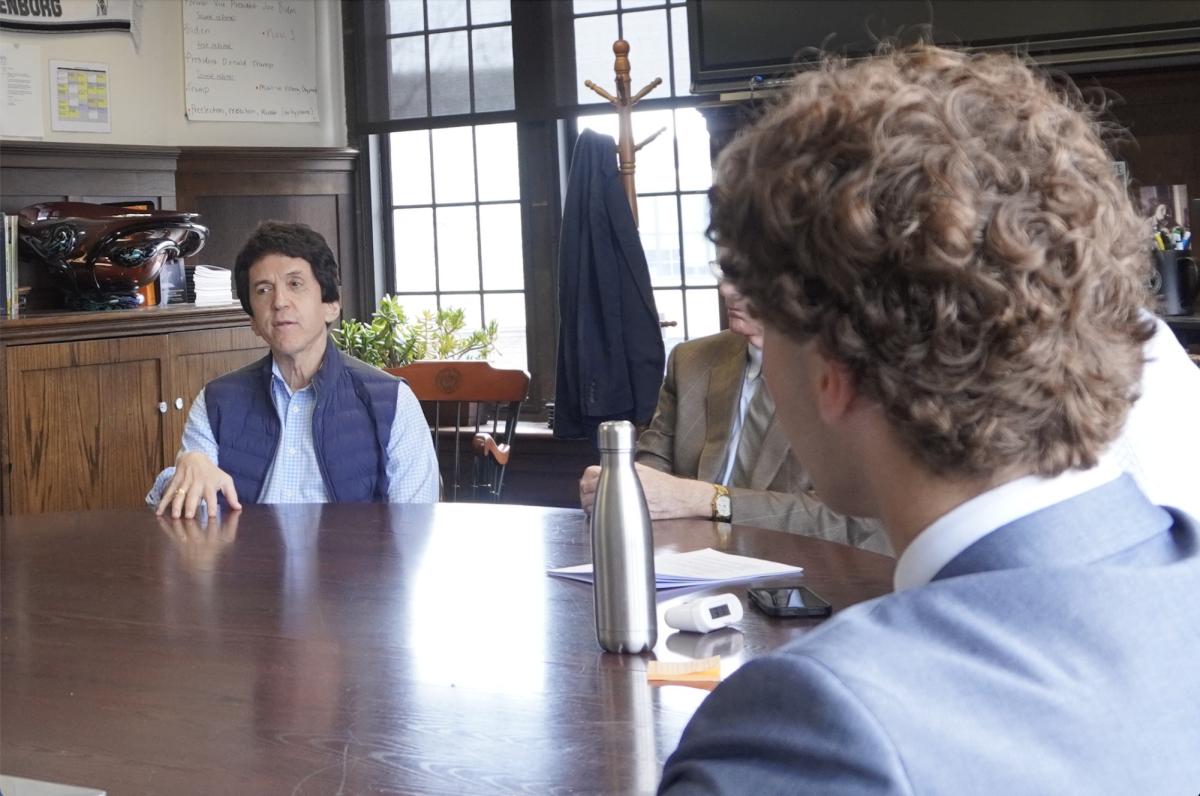



















The Hill School welcomed back two journalistic experts back to campus on April 8, as journalists Norman Pearlstine ’60 and Clark Hoyt ’60 returned back to campus to talk to students and faculty members.
Pearlstine and Hoyt have individually both had long-standing careers in the world of journalism. Pearlstine, who served as an editor at The Wall Street Journal, the editor-in-chief of The Time Inc., and the chief content officer at Bloomberg L.P., has worked in the journalism business for over five decades and had great influence in the world of journalism. Hoyt, who retired in 2015, served as public editor for The New York Times from 2007–2010 and as an executive for 38 years at Knight Ridder, which was once the nation’s second-largest newspaper publishing company. Hoyt’s coverage of Democratic vice-presidential candidate Thomas Eagleton also won the 1973 Pulitzer Prize for national reporting.
Hoyt and Pearlstine re-grouped together at Hill on the eighth to discuss their roles in journalism throughout their career, and how they kickstarted their careers into the community. They discussed the importance of journalism in people’s day-to-day lives, and what they hope for for the future of journalism and news in the United States.
Both Hoyt and Pearlstine wrote for The Hill News as students at the school. At that time journalism and article publication was much different then it is today. “We came up in a very different media world.” Hoyt said.
When writing for the school’s newspaper, Pearlstine gave credit to the environment that was presented in the newsroom, which he described as “very much a house environment.”
Pearlstine also mentioned the importance of sports in the newsroom at Hill. “Sports was an important part of the story at that point.”
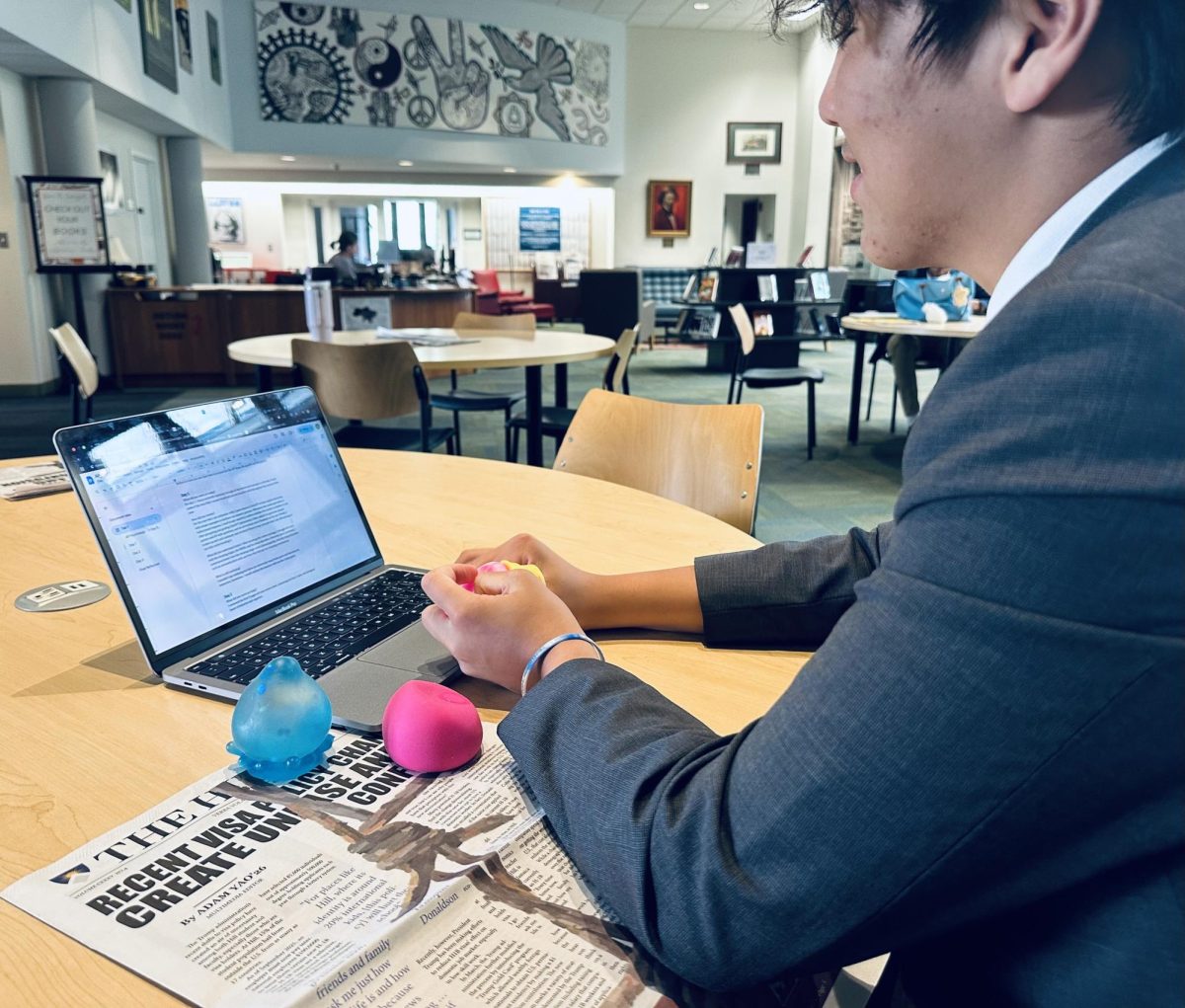
At the time Hoyt and Pearlstine began writing news after graduation, paper news was the main source of news. However, through the past six decades, printed news has gone down exponentially. In 1984, at the height of newspaper making, there were over 63 million digital and printed newspapers being printed daily, while very recently in 2022, there were only around 20 million newspapers daily. Remarking on this decline, both Hoyt and Pearlstine raised questions on whether printed newspapers will be able to sustain economically.
Hoyt, for one, doesn’t think that printed newspapers as many are used to seeing are going to survive economically.
“I don’t believe they will come back,” Hoyt mentioned. This is a key talking point for many people who are used to getting their news from the mailman. For the past 20 years, newspaper sales have gone down.There are about 6,000 newspapers that publish in the United States, with an average of two shutting down per week. These numbers are decreasing at an astonishing rate, and Hoyt believes that the typical printed newspapers may cease to exist.
However, digital news is still extremely prevalent in the United States. Many giant news outlets such as CNN, Fox News, and NBC, are almost strictly focused on posting digital content for people to read on their devices. Hoyt, however, criticized online news for their enclosed algorithms, rewriting news media primarily around what people want to see, and not what they need to see.
“I do think that a lot of journalism now is much more focused on and aware of clicks,” Hoyt said. “I think that is a serious kind of issue.”
Pearlstine and Hoyt mentioned that there are still news organizations that are up-and coming and that there may still be a bright future for newsmaking. “There are more than 500 non-profit news organizations that have started up in the past five years.” Pearlstine mentioned. “There are ‘hopeful seedling’ newspapers coming up,” Hoyt said.
While the future of paper news making may seem bleak to many, Hoyt and Pearlstine both expressed hope for the future of journalism as a whole. Hoyt underscored that if we focus on local issues and what we can control, it will help restore faith for society.
“When we begin to deal with local issues and learn about them fully, that begins to build faith not only in journalism but also in society,” Hoyt said.