













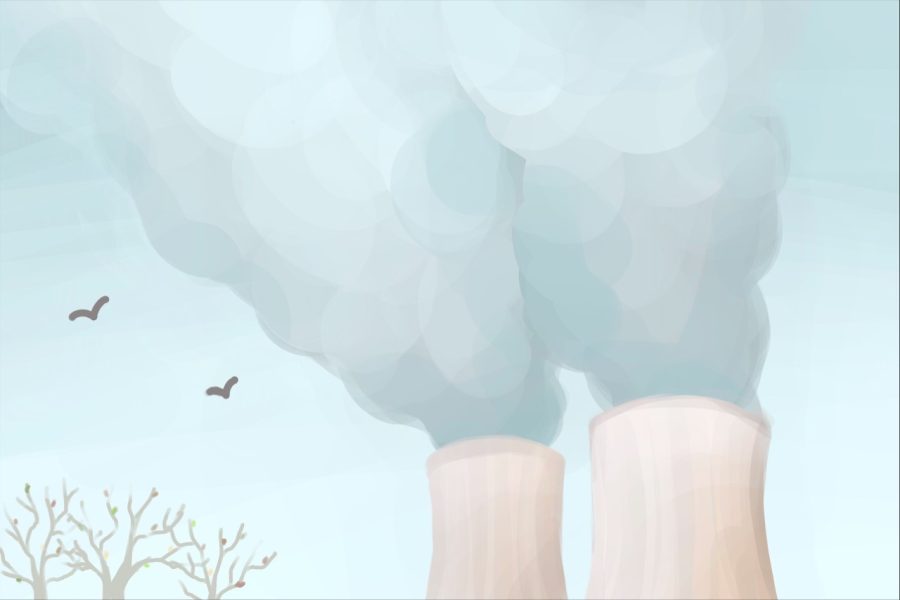








The creation of energy has fascinated society’s scientists for years, and even at The Hill School, the debate over nuclear energy remains relevant.
The most impactful limiter of nuclear energy is the cost. As Nicholas Malinak, instructor of history at the Hill School, explains, “To build a nuclear power plant requires billions and billions of dollars… often over $10 billion, and it takes decades to pay back.” This massive investment required by companies discourages them from planning a future with nuclear power, which reflects a system that prioritizes short-term profits over the well-being of the country.
Due to high costs, nuclear energy lags behind faster and cheaper energy alternatives such as solar power and natural gas. Even though nuclear energy is expensive, it is necessary to expand nuclear production to ensure future U.S. energy dominance.
Public reception to fully adopting nuclear power is another obstacle. Malinak states that “The two main reasons… are the high upfront cost and public fear—especially after Three Mile Island and Chernobyl.” These major events formed a reputation of danger around nuclear energy that continues to falsely affect public opinion.
Even though modern nuclear technology is dramatically safer than in the past, many people still think of nuclear energy with major disasters instead of the benefits it would bring.
Here in the US, stories like the Three Mile Island incident only served to prove to Americans the dangers of nuclear power. As Malinak explains, “Three Mile Island was the most serious nuclear accident in the United States… but no deaths have ever been directly linked to it.” This only furthers the gap between citizens’ perceptions and reality.
Although this event occurred in the past, its effects are still visible today, especially for students at The Hill School, where the nearby Limerick Generating Station serves as a reminder
of both the benefits and fears surrounding nuclear power. Current policy thinkers still reference Three Mile Island when discussing nuclear power; this outdated fear-based belief hinders American energy policy. Even very unlikely risks are taken seriously because of the potential ramifications.
Malinak points out that, “A nuclear catastrophe isn’t when one thing goes wrong—it’s when many things go wrong at once.” The unlikelihood does not stop the need for stricter regulations, which in turn adds to costs and slows build times.
Another problem with adopting nuclear energy is the ever-so-outdated U.S. energy grid.
Large swaths of infrastructure are not designed to effectively transport energy across long distances, such as the entire United States. Rather than using the outdated grid to discourage nuclear expansion, it instead proves that the U.S. needs to modernize.
This culminates with Malinak explaining that, “You can’t build a power plant 500 miles away and expect it to work efficiently—you lose too much energy in transmission.” This only serves to add to the costs of nuclear energy because you would have to upgrade the entire U.S. energy grid to make cross-continent transportation profitable.
The United States energy sector will lose its dominance until it can move beyond the outdated fears and invest in more forms of long-term infrastructure.