



















In the upcoming 2026-27 academic year, The Hill School will celebrate its 175th anniversary, honoring a long-standing tradition of close-knit community and a culture where “Hill ties never sever.” Yet behind the celebration, the school’s business office and financial leadership are quietly navigating rising recession pressures. Whether The Hill can withstand the challenge and protect its legacy remains a question worth examining.
Recently, financial analysts have raised the odds of an economic recession in the US. Increasing geopolitical uncertainty often serves as one of the harbingers. Amid the ongoing Iran conflict, the blockage of the Strait of Hormuz, a strategic maritime chokepoint responsible for 20% of the world’s oil transportation, triggered a major spike in oil and energy prices, driving up the costs of essential inputs such as agricultural goods and construction materials.
According to CNBC, macroeconomic indicators have also reflected the trend. While the unemployment rate has held steady at 4.4%, the labor market faces significant pressure, with 92,000 jobs lost in February after only 116,000 jobs were created throughout 2025. As inflation jumps to the highest level in almost two years, the Labor Department reports, consumer spending weakens because households lose their purchasing power.
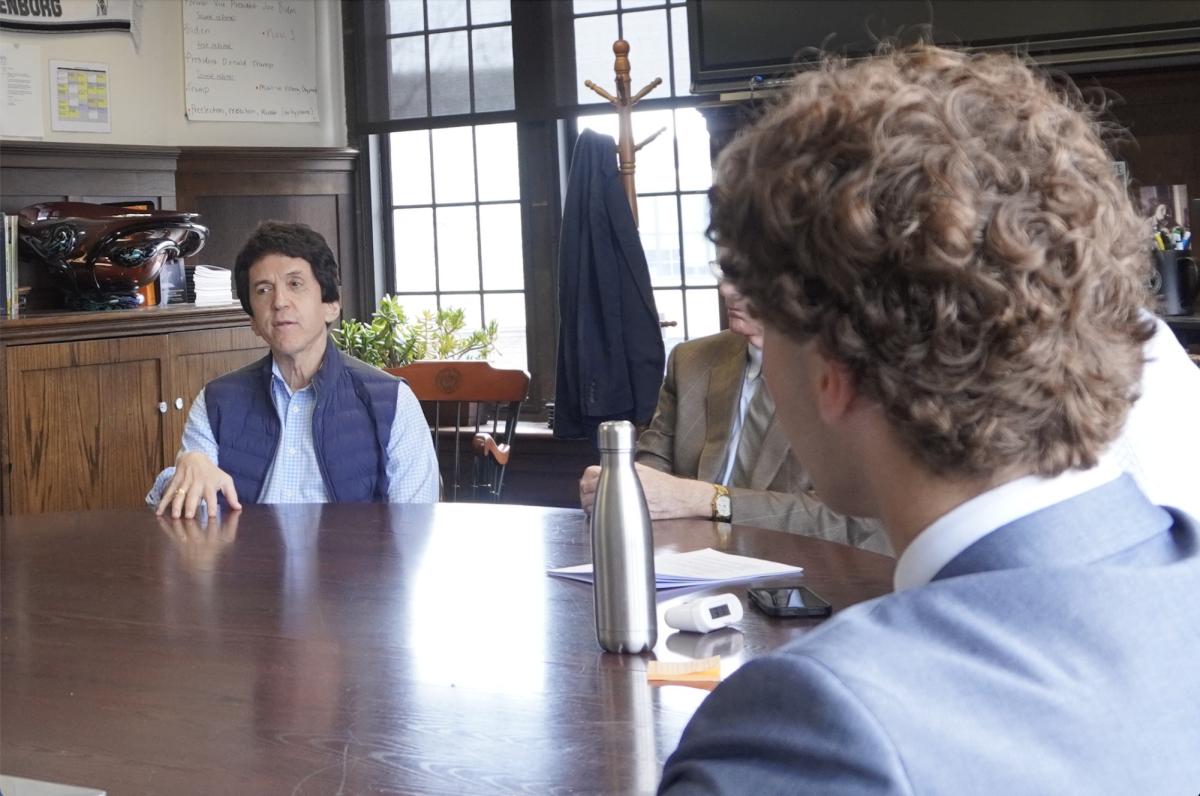
For institutions like Hill, where operating costs span a residential campus, a full faculty, and a whole student body, inflation is among the immediate fears. “Hill is an expensive place, and in a fearful economy, people will have second guesses about spending that type of money,” Advanced Economics Instructor Kristopher Donaldson anticipates the coming school year. “We’re not in a position to cut costs, and increasing tuition would risk reducing enrollment rates.”
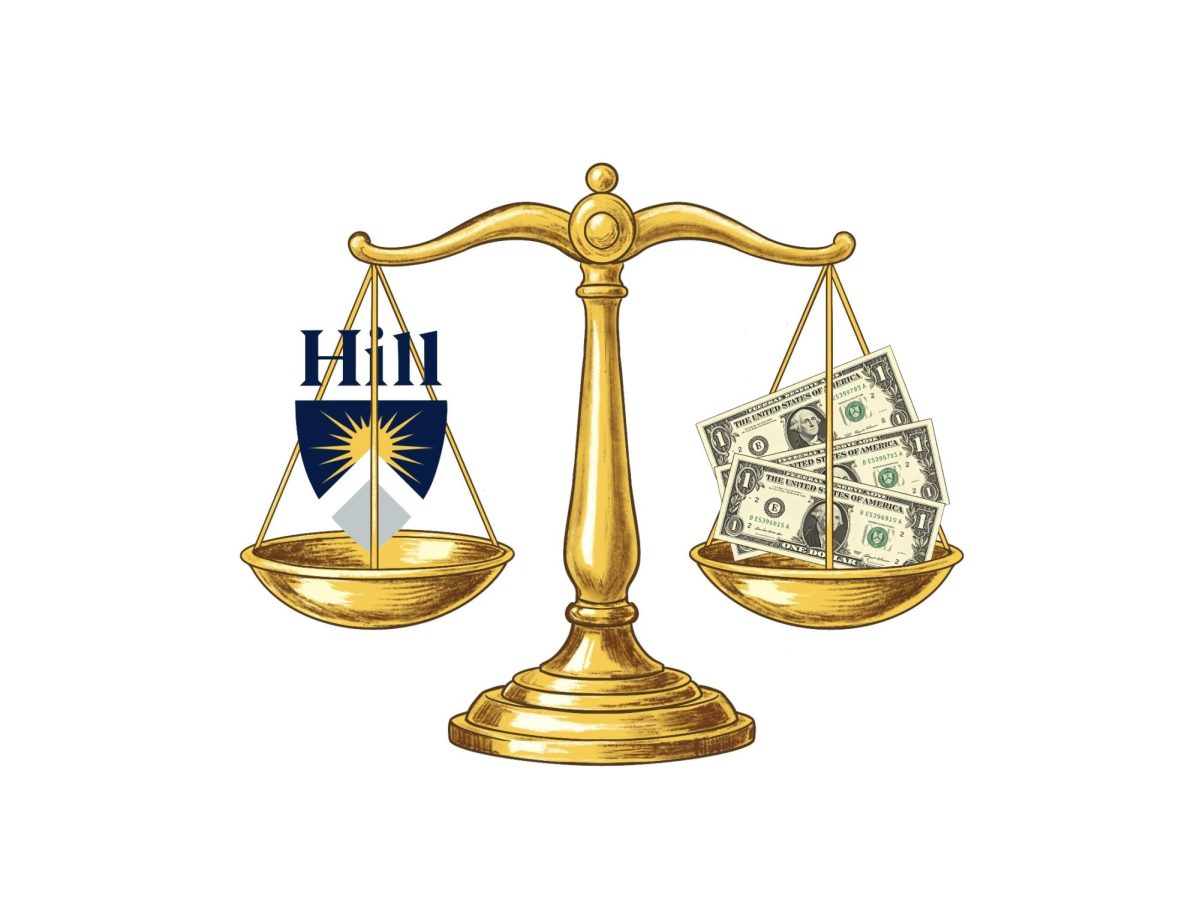
While Hill’s expenses are certainly going up, the impact is not as big as one might think. Unlike many schools that rely solely on tuition, The Hill School operates on three revenue streams: tuition, the annual fund, and the endowment draw. More importantly, “we have a relatively large endowment which we can fall back on when needed,” contends Scott Faulkingham, Assistant Treasurer and Controller of the Business Office. The endowment serves as a critical buffer, especially during the current bearish market outlook.
The endowment is a collection of donated funds invested across equities, credit facilities, and cash holdings to generate long-term returns apart from the school’s tuition revenue. “We have multiple advisors to help manage our investment portfolio so that when one asset class falls, others are positioned to compensate,” Faulkingham points out.
Yet, one would argue that investment practices are increasingly more aggressive and riskier than ever as private credit lenders like Blue Owl Capital are facing client withdrawals, rising defaults, and tightening liquidity. Ari Baum, Assistant Head of School for Community Life and AP Economics Instructor, stresses that “the market is so mobile that it is becoming immobile.”
However, even if there is a negative return on the current investment portfolio, “it doesn’t really impact us right at this second,” Faulkingham reaffirms. Since Hill Endowment’s draw rate is calculated on a trailing 20-quarter average, “any single market dip represents just one data point out of twenty,” he explains.
To further strengthen Hill’s contingency planning, the school also maintains its annual fund, with the advancement office actively engaging its alumni base to drive contributions. Together, the annual fund and endowment draw allow the school to moderate tuition raises while preserving the ability to extend financial aid to families in need.
On the expense side, Hill is freezing budgets in non-critical areas and pressuring vendors to hold their rates. When freezing is not an option, Hill pivots. In partnership with Sodexo, the school’s dining partner, for example, “we often shift menus when specific food prices spike to absorb some of the inflationary pressure without passing it fully onto the operating budget,” Faulkingham says. Beyond campus, Hill draws on its long-standing network of peer institutions, including Andover, Exeter, and Deerfield, sharing practices and strategies to navigate mutual challenges.
That said, the stakes are real. “Some colleges have had to close their doors” because they have failed to adapt to financial pressures, Faulkingham warns. While the economy has not officially entered a recession, Donaldson believes that “the recessionary fears are valid.” In fact, the fear has spread even to Hill students, some of whom have expressed concerns that prolonged market pressures would reshape their career prospects and competitiveness for years to come. For Hill, addressing the short-term shocks while balancing its long-term growth is by no means an easy task.
Nevertheless, the underlying situation is “not without precedent,” according to Baum. Faulkingham echoes the sentiment with a longer view.
“History is on our side,” Faulkingham said. “We’ve been through wars, recessions, and all sorts of different things, and what’s going on now is no different.”