


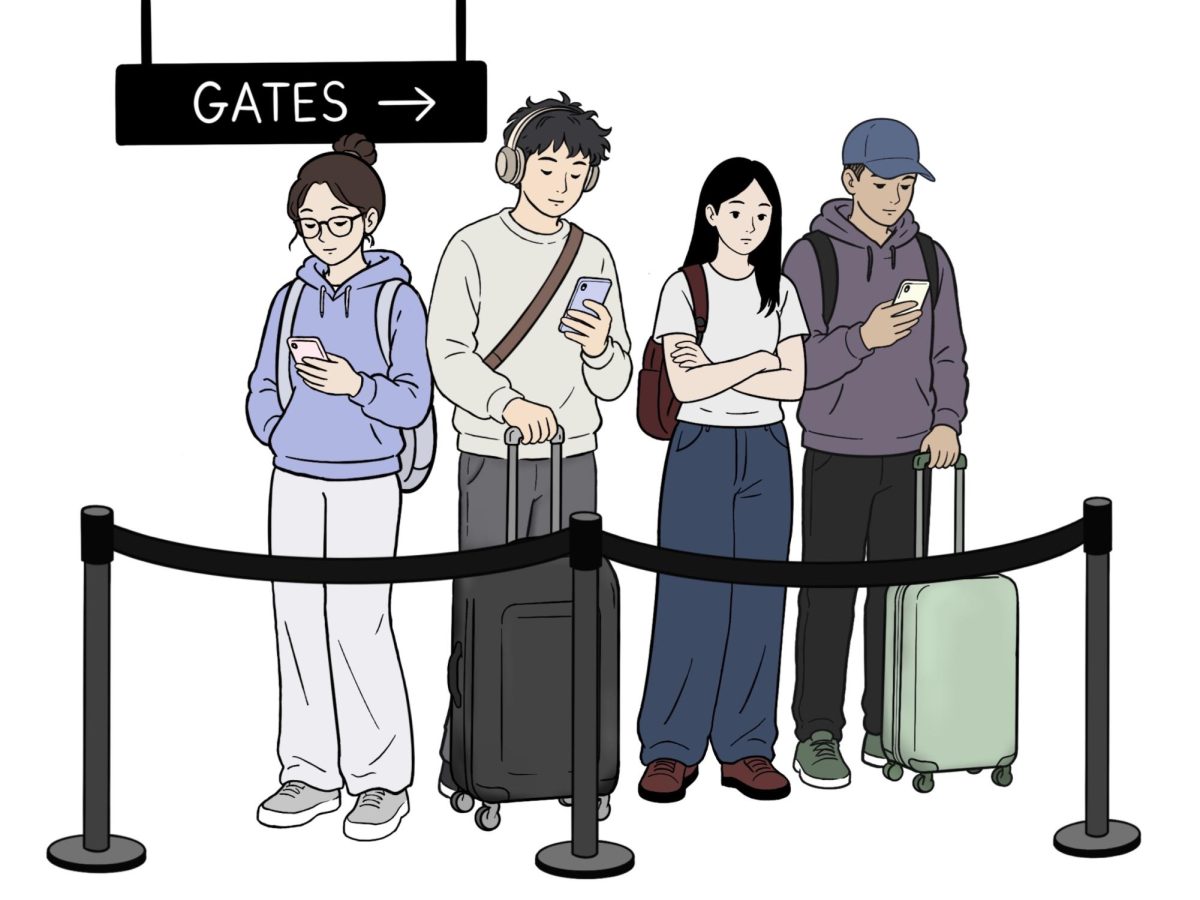
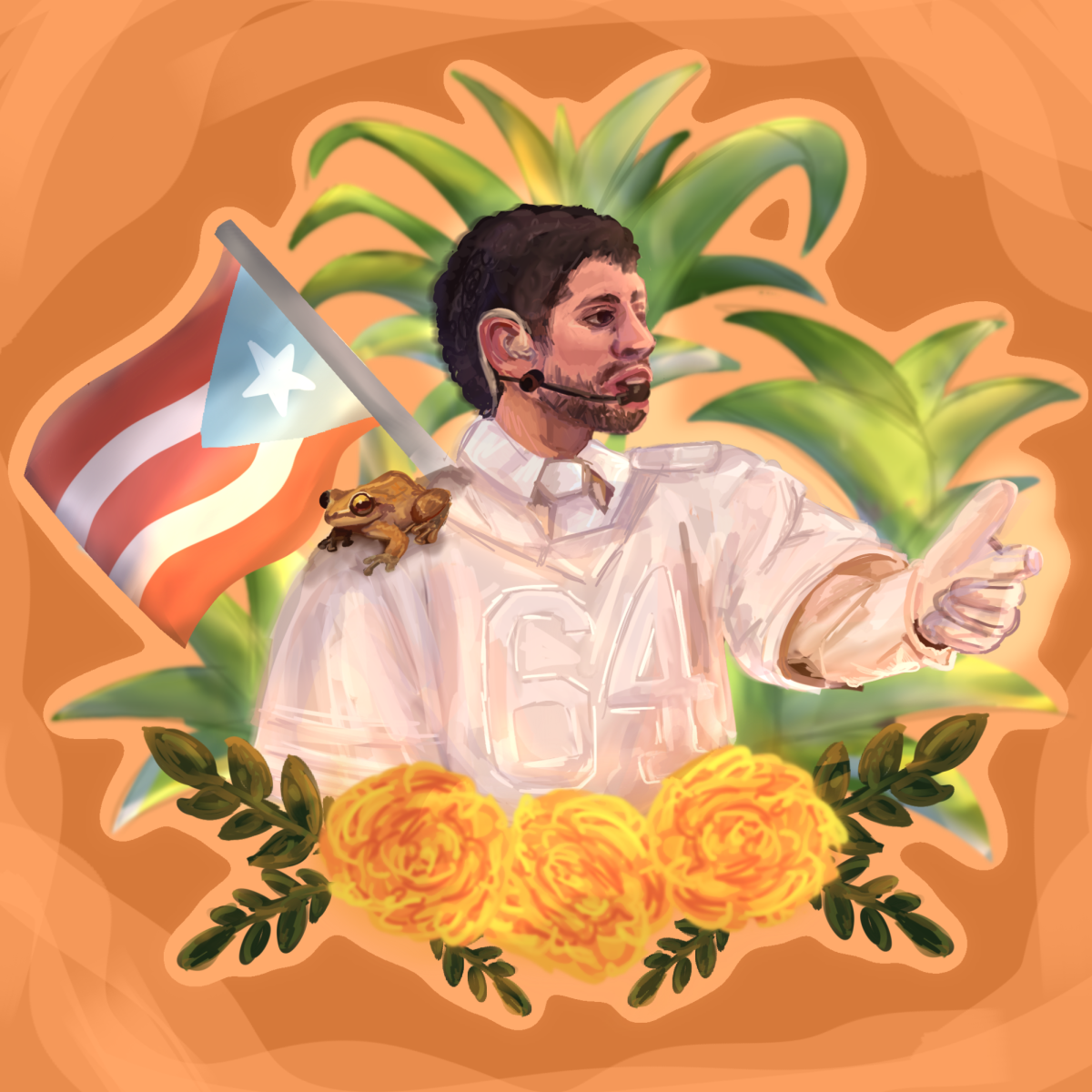





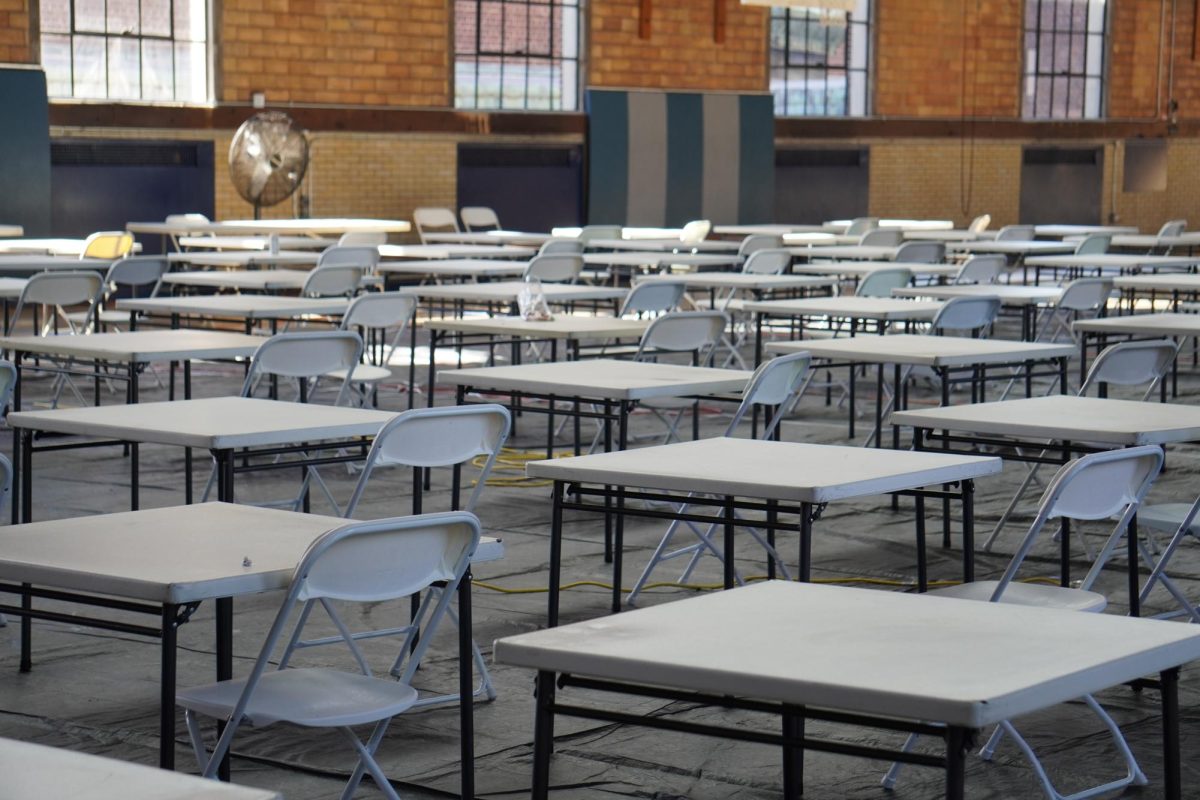








At 2 a.m. on a spring break morning, Assistant Director of Admissions Anna Ribeiro arrived at San Juan International Airport for a 5 a.m. flight to Philadelphia. Her extra early arrival was no accident. Recently, TSA lines have been growing ever longer, and with many people missing flights and being stranded at the airport for hours, she wanted to be prepared. However, even with three hours to spare, the situation was not optimistic. Stanchions were already set up on the sidewalk outside the terminal, waiting to be filled, and the TSA line stretched from one end of the terminal to another.
Ribeiro was not alone in experiencing the horror of airport lines. Across the globe, students, families, and travelers are arriving at airports hours earlier than they used to, bracing for the waits that have ballooned from 45 minutes to multiple hours. The current airport situation is due a government shutdown that is now stretching into its second month. The shutdown has left airports empty, as AP Government instructor Nick Malinak points out: “TSA workers are required to come to work because they’re essential workers, but they’re not getting paid, so more are calling in sick or quitting.”
The Hill School community felt the effects of this shutdown firsthand over spring break. Frank Xu ’28, returning from an international trip back to his home, Beijing, described arriving at customs after a 15-hour flight only to face a line far slower and far longer than anything he’d experienced before. “They are much longer than typical wait times,” Xu said. “I was already exhausted coming down the plane after a 15-hour flight and I felt slightly frustrated having to wait this long.”
Yiyi Wan ’28, on the same flight back to JFK, commented on the atmosphere of the situation: “As the time slowed down, I could hear increasingly more groans of frustration,” Wan said. “People’s plans were getting pushed back. Even the next flight already landed, and it caused even more chaos.”
This type of delay is affirmed by Zander Holub ’29, who was going to New York a few days before the start of school. “The drive to the Grantley Adams International Airport took three hours, although it usually only took one,” he described.
According to Holub, the majority of passengers did not make their flights, because they did not come early enough. “You had to come around 6 hours before your flight to get through,” he said.
Luckily, Holub did not have to wait in the lines, due to his family’s strategic planning and relations within the airport, which allowed him to skip to the front of the TSA line. “The line for security started out in the parking lot, and it would’ve taken about five hours if we were to wait in it,” he admitted.
Ribeiro described the crowd at San Juan Airport as surprisingly patient, given the circumstances. “For the most part, they were pretty tame,” she said. “I think there was an expectation and an understanding that this was kind of how it was going to be.” But patience, she noted, only went so far. A flight attendant near her had complained that even airline crew got left behind if they couldn’t clear security in time. Delta, she’d said, simply couldn’t wait. “At the end of the day,” Ribeiro added, “the consumer loses.”
To understand why airports are understaffed and TSA officers are working without pay, we need to go back to last fall. The Department of Homeland Security, which funds both TSA and ICE, never received its annual appropriations budget. The sticking point was the funding of ICE. Following the police shooting of Alex Pretti, a protester in Minneapolis, Democrats refused to fund the DHS, demanding sweeping reforms to the tactics and accountability of federal immigration agencies like ICE.
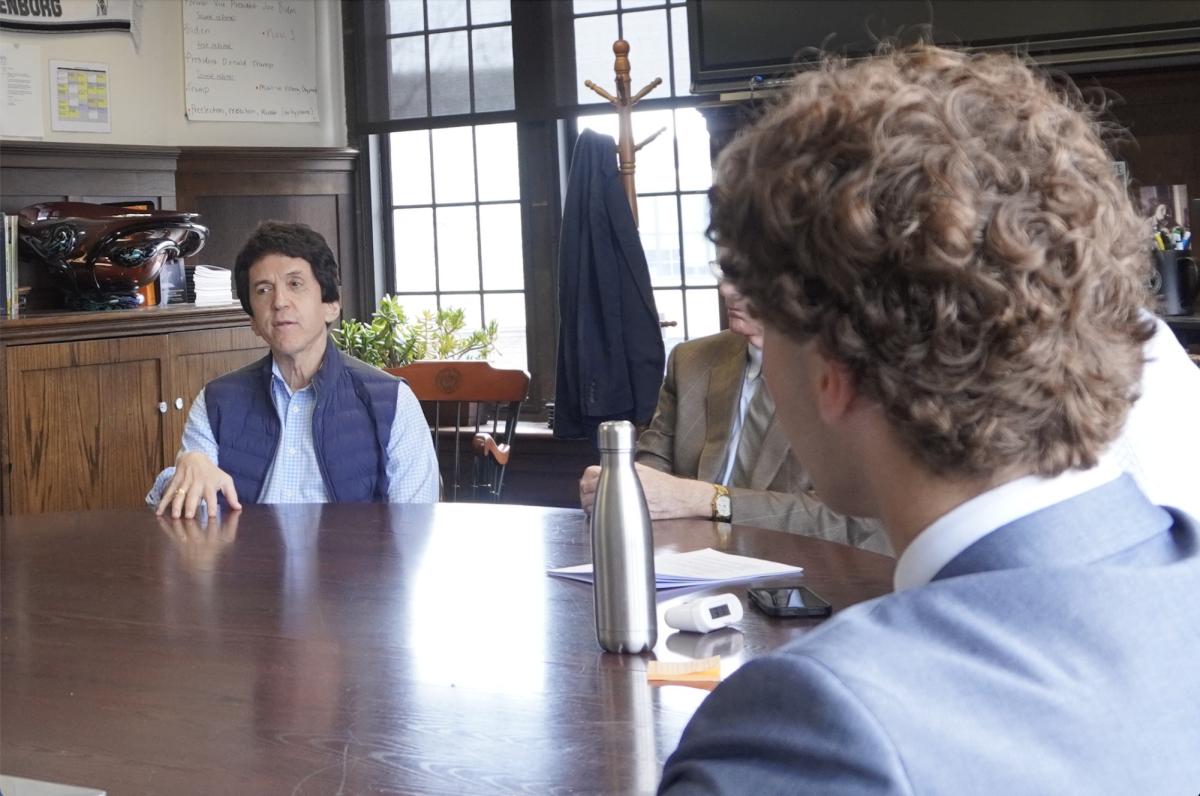
“The budget for Homeland Security, which includes TSA, was supposed to be put in place about a week after what turned into the shooting of Alex Pretti,” Malinak explained. “Democrats were not willing to fund the DHS and all of the money that was going to ICE. It was a real political issue.”
Then, about a month ago, the Senate passed a standalone bill to simply fund TSA and end the standoff. Trump told House Republicans not to take it up. He then announced he would direct existing funds to pay TSA officers, a move Malinak described as constitutionally murky. A week later, it still wasn’t clear whether TSA workers were actually going to receive pay.
Malinak gives a direct answer as to why this issue has not yet been resolved: Trump doesn’t want the politics to end. “He seems to want to continue to push that issue,” he said. “It’s not even clear why they’re still having this fight.”
For students like Xu and Wan, the solution feels more straightforward: open more checkpoints, staff them properly, stop letting political fights get in the way of the daily lives of civilians.
Xu offers a comment on the situation: “While I do understand the importance of politics in the US, I don’t want it to disrupt daily life, especially not for international students who aren’t involved in it.”
For now, Hill travelers are adapting however they can. Ribeiro, who has another trip planned in 3 months, says the experience has changed how she thinks about flying in the short term. “It feels a bit like I have to prepare myself in the same way that you would prepare yourself to spend a day in Times Square on New Year’s Eve,” she said. “It just shows you how fragile these institutions of security really are.”
No one wants politics to disrupt their daily lives, much less students and faculty who already have a busy schedule. However, with the political fight between Republicans and Democrats blazing on, this problem will not cease to exist in a number of days.
“If we get back to the politics where people are trying to make the government function, rather than using a shutdown as a political tool, it won’t happen as often,” Malinak said.