























This column is part of our student opinion series, “A thousand hands, a thousand voices.”
At The Hill, we are required to do a daily after-school activity, whether that be a sport or a non-athletic commitment. This is a requirement for all three terms of the school year, which gives us a jam-packed and exhausting schedule every day. From 8:25 a.m. to 9:30 p.m., we attend school, our co-curricular activities and study hall, with the exception of possibly one off day per week. Student athletes at The Hill School should be required to have at least two off days per week to ensure proper recovery and superior performance in athletic competitions.
The Hill School handbook states that “interscholastic athletics or another afternoon activity is required of all students in each academic term.” Even students who chose to participate in non-athletic activities “must complete a weekly fitness program concurrently during that term.”
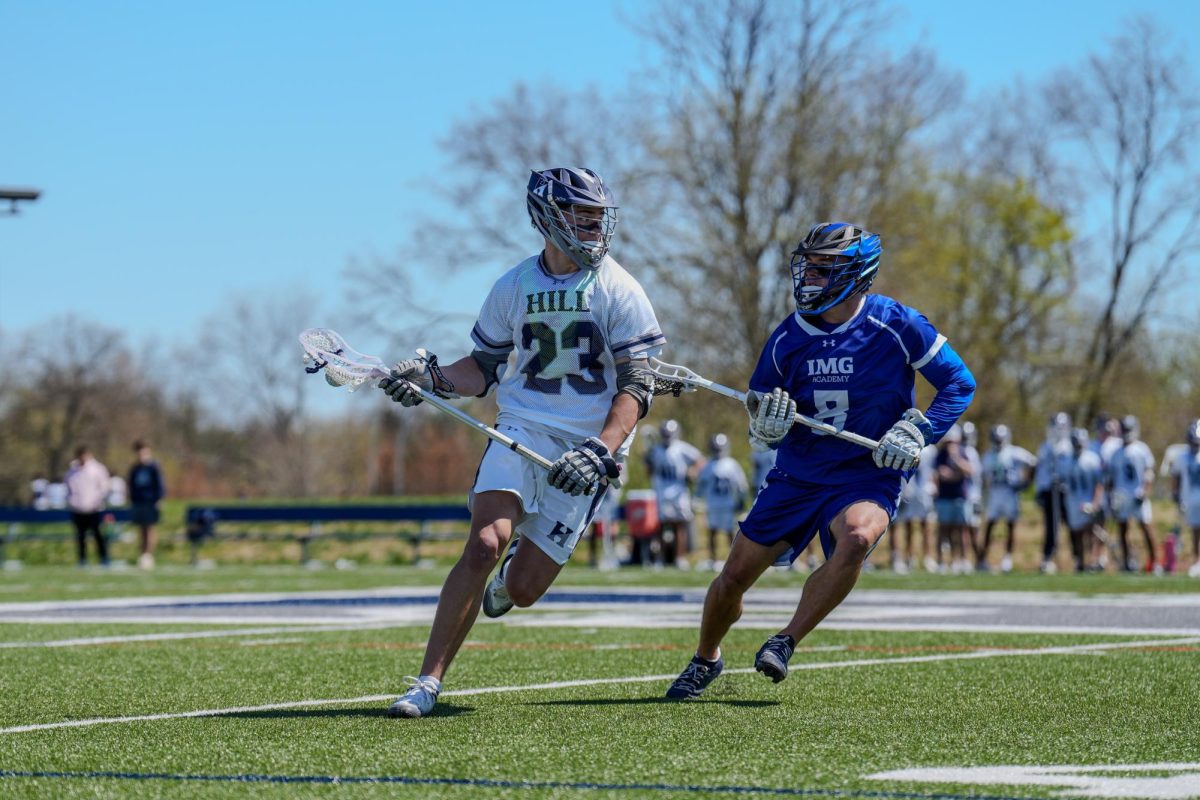
Because all students are required to do an activity, they are given no choice on how many off days they can have, even if they feel tired or burnt out. The Hill School takes pride in its athletics and the fact that Hill athletes are given the opportunity to compete at the highest level. This causes many teams to have highly demanding practice and game schedules with minimal breaks.
Many Hill teams’ game schedules involve tournaments that have athletes playing three to four games in a weekend, which is both mentally and physically tiring. According to GoodRx, “Experts generally recommend taking 1 to 3 rest days per week. But the amount of rest you need depends on your fitness level and exercise intensity.”
It is crucial for these athletes to have off days, especially following a tournament or a long week of practice, because tournaments and constant practices are extremely intense on athletes. Many athletes will likely feel soreness and fatigue from constant exercise, which can be traced to what is actually happening in their muscles when they perform high-intensity training and competitions.
The Northern Inyo Healthcare District states the importance of recovery from hard workouts because “your muscles experience microscopic tears during exercise. When you allow your body to recover on rest days, your muscle tissue is able to repair itself, ultimately increasing in size.”
When the body is not given time to repair its muscle tissue, it will not experience the benefits from the exercise, and it may even lead to more serious consequences, like injuries. Not only does excessive exercise lead to physical problems, but it can also cause mental problems.
An article by UCHealth suggests that “training stresses the body in various ways, but it’s far from the only stress athletes face. Work, school, relationships and the busy pace of modern life can all exacerbate stress, which has a cascade of effects on the body. Stay in a stress state long enough, and there are negative impacts on health.”
Considering that The Hill School has a very strong academic program, it requires a lot of work from the students. If students are not getting the rest or free time they need, then they may underperform in school, leading to an impact on their mental health and futures. One student at The Hill School, Cecelia DiPrinzio ’27, shares her opinions about rest days and how demanding athletics affect her mental health.
“Once games start picking up, I feel like one rest day a week isn’t making up for the amount of games I’m playing. Especially because games take a lot more of a toll on my body,” DiPrinzio said. She also says, “It can be a lot to deal with mentally,” when talking about the importance of performing your best in athletics and academics, while feeling constantly drained or burnt out.
If we want our student-athletes to have a higher performance in school and in their athletic contests, then it is up to the student-athletes to advocate for the rest that their bodies need. We are all aware if our bodies are being overworked or if we’ve hit a draining point in the season. Because it is up to the coaches to schedule off-days, it is important that the athletes take matters into their own hands and talk to their coaches when they think that an off-day is necessary.